Showing posts with label Jerusalem. Show all posts

Sunday, October 18, 2015

Letter from Pisgat Ze'ev, Jerusalem


Pisgat Ze'ev in quiter times: Jews and Muslims mix in Kosher Cafe


This is a letter sent by a friend living in Pisgat Ze'ev, Jerusalem to her friends outside Israel.
Dear Friends,

Thank you all for your wishes. It means so much to hear from you and to know that you are thinking of us. We miss being in touch, hope you are doing well, and are heartened by your concern. Yes, these are definitely difficult times, times for concern. I know you wanted to hear more from someone local about what’s happening here and how we’re reacting. These are my impressions….

Well, recent events reflect some shifts in Israel that have been a long time coming but somehow still caught us by surprise in their intensity. Jerusalem is feeling the heaviest weight of the burden, reminding us too much of past intifadas and conflicts, of past pain and of worse things that may yet come. Although this “terror wave” isn’t yet being called an intifada or uprising, in a way Jerusalem feels at war.

My friend whose son is in the SWAT unit of the border police is experiencing the worries that parents of soldiers felt during last summer’s war, when their sons were deep in the Gaza Strip trying to stop the incessant rocket fire into Israel and to uncover the terrorist tunnels. This time, our boys and girls on the front lines today are standing vigilantly on the tense almost-empty street corners of Jerusalem, which until a few days ago was thriving with local visitors and foreign tourists all enjoying the beauty of its old historical walls, burgeoning night life, and delicious Israeli restaurant fare. Now, all these places are silent, with Israelis rushing from their homes to workplaces and back, avoiding public spaces. And with many Arab workers barricaded in their East Jerusalem neighborhoods and prohibited from going out to work in the Western part of the city.

Maybe it’s not yet a war, but we certainly are on the defensive. Suspicion has replaced guarded trust and familiar casualness between Jews and Arabs in our city. Mutual suspicion and fear have risen up between Jews and Arabs – who honestly and truly do coexist in Jerusalem – in its hospitals, grocery stores, cafes, and government offices. Relative coexistence pervades even the neighborhood of Pisgat Zeev to some extent, with some Arabs buying homes here – including my own next-door neighbor. But now, in this terror wave, suspicion has raised its ugly head. How can it not? When a 13-year-old Moslem boy from our adjacent neighborhood of Beit Hanina walks over to Pisgat Zeev with the intention of killing Jews and then brutally stabs another 13-year-old, a Jewish boy riding his bicycle on a quiet residential street outside the candy and toy stores in Pisgat Zeev, how can we now help but look over our shoulders at every Moslem child and adult passing us by on the street?

If such young boys and girls can be persuaded into believing ludicrous lies about the Israeli Jews’ intentions to destroy or confiscate the Al Aksa Mosque atop the Temple Mount, if these children believe that killing Jews is the right way to protest that supposed threat to their holy of holies, if their Facebook pages and muezzin sermons and tacit parental approval lead them on this treacherous path, then what hope do we have for the future generation of Moslem youth growing up with these negative convictions? Most experts here believe that the vast majority of Jerusalem’s Arab residents wants quiet, wants peace, wants to keep working in the city. But as often happens in our country, the volatile extremists make their mark and influence events.

Wariness is rampant on both sides: The Jews are trying anxiously to avoid encounters with possibly malicious Arab neighbors, and moderate Arabs have told us that they too are afraid – of revengeful accusations or even worse from angry Jews and of repercussions from Arab extremists for speaking out and condemning this latest spate of violence.

So many friends have been close to terrorist attacks. In the course of two days this week, I personally had three “near misses” right before/after knife attacks – at Ammunition Hill, in Pisgat Zeev at my children’s train/bus stop, and at the Central Bus Station. Tuesday afternoon, I was on my way to pick up my son from high school because we decided he shouldn’t be taking public transportation when his route had been hit several times by terrorist attacks in past days. A few minutes after leaving Pisgat Zeev, I unknowingly drove up to Ammunition Hill/Police Headquarters just after a young woman shouted “Allah is Great” and stabbed passers-by. I arrived at the same time as the first responders. Stuck in my car in the road blockade at the scene, I saw tens and tens of soldiers, police, and civilians running to help, rushing to try to save their fellow Israelis. I saw head-scarfed Arab girls who had witnessed the attack, sobbing and rocking on the ground in horror. I watched the paramedics who had treated both victims and perpetrator, putting the stretchers into the ambulances. I looked on as the city’s mayor, Nir Barkat, quickly arrived to assess the situation and calm the onlookers.

In this crazy situation, from my car, I thought about how, unfortunately, our too-frequent past experiences have made our city’s responders extremely efficient. And another thought hit me: With all of the tremendous complexity it entailed, the medical personnel gave care to the terrorist too, not just to her victims. I’ve seen that humanity again and again over the past few days – and not just from those who took the Hippocratic Oath. Although Palestinian propaganda-mongers have been claiming the opposite, I’ve seen that even people trying to prevent these lone terrorists from continuing on their killing spree have been trying not to use excessive force to stop them, when possible.

And I thought again how these times have made all of us come together as a community, in our mutual concern and defense. Rather than running away from frightening events, even civilians ran toward those in distress. Yes indeed, most Israelis are veterans of military service, but not all have combat experience and yet the sense of collective responsibility, of proactive action, dominates and pulls people to try and help.

That sense of community and humanity extends out to you. We feel your presence and your togetherness with us, from afar. Let’s continue to be in touch and let’s hope and pray that these difficult days pass quickly, and when things calm down we’d really like to see you here again in our beautiful city.

Best wishes for quiet days,

Dee
 See also:

Thursday, July 23, 2015

I see ISIS flags fly in Jerusalem (where Jerusalem light rail stops)

Inside the Pisgat Ze'ev shopping mall (from an earlier visit): Arabs eating in kosher Jewish restaurant
The Arab village Shuafat seen today from a friend's apartment in Pisgat Ze'ev. The security wall separating the areas can be clearly seen. The building in the middle was flying the ISIS flag.
Original post was October 2014, but has been updated 23 July 2015 following a BBC Panorama programme about the Jerusalem Light Rail. See update at end.

Pisgat Ze'ev is an area just 3 miles north of the centre of Jerusalem that in so many ways characterises the Israeli-Arab conflict and the widespread misunderstanding of it in the rest of the world. Pisgat Ze'ev was an area that played an important role in servicing the second Jewish Temple but was a deserted wasteland under the illegal Jordanian occupation between 1948 and 1967  (interestingly in 1930 much of the land had been bought by Jews).  However, Pisgat Ze'ev is now an important suburb of Jerusalem (and is almost a city in its own right), with over 50,000 residents (an increasing number of whom are Arabs). The new Jerusalem light railway starts from Pisgat Ze'ev. Despite all of this international anti-Semites 'experts' who have never been to Israel laughably classify Pisgat Ze'ev as "an Israeli settlement in occupied East Jerusalem".

Despite what the international anti-Semites 'experts' say, any eventual 'final borders' of Israel will include Pisgat Ze'ev as evidenced by the fact that the infamous security wall snakes around Pisgat Ze'ev separating it from the sprawling Muslim Arab village of Shuafat. Unlike "Jewish" Pisgat Ze'ev - where any additional housing plans draw the wrath of the international community - Shuafat continues to grow without the need for any planning permission; and unlike Pisgat Ze'ev  where Jews and Arabs have equal rights, no Jewish civilian can even safely step foot in Shuafat, despite it technically being under Israeli control.  Bizarrely, although Shuafat looks a lot like Pisgat Ze'ev in many respects (except the houses are actually larger and often more luxurious in Shuafat) it is officially classified as a 'Palestinian refugee camp' by the United Nations.

Even though many residents of Shuafat are employed in Jewish businesses in Jerusalem, during the 2000-2004 Intifada residents of Shuafat celebrated each suicide attack against Israeli civilians with wild celebrations and fireworks (something I can personally testify to seeing). The same happened this summer when residents celebrated Hamas rocket attacks against Israel even though some were targeted at Jerusalem. Occasionally residents of Shuafat enjoy shooting at residents of Pisgat Ze'ev. Despite all of this the Jerusalem municipality in its wisdom decided to route the Jerusalem light railway with a stop in Shuafat to show that it wanted to serve all residents of Jerusalem. Although many residents of Shuafat use the train, this act of faith has been 'rewarded' with constant attacks on the train at Shuafat resulting not just in frequent loss of service (and millions of shekels wasted on repairs) but in Jews being too afraid to travel in it. Also, during the summer gangs of young thugs from Shuafat came up to Pisgat Ze'ev armed with knives. Little of this anti-Semitic Arab violence and intimidation is reported in the Israeli media, let alone the international media.

After sunset security patrol comes to monitor what is happening in Shuafat from outside my friend's apartment
All of that provides the background to what I witnessed today. Sitting in a friend's apartment in Pisgat Ze'ev overlooking Shuafat we could see an ISIS flag flying on one of the buildings. Nobody was particularly surprised by this. Nor was anybody surprised when after sunset a border security jeep stopped outside the house with three IDF soldiers (two Jews and a Druse) who had come with night vision binoculars to monitor what was going on in Shuafat. After providing them with coffee and cake they told us they were aware of ISIS flags in the village (I understand they had already been in to have them taken down). I also learned that it was soldiers from this unit who had found - hiding in Shuafat - the commander of the Hamas brigade who had ordered the kidnapping and murder of the three Israeli teenagers in June.

This was just an ordinary day in Pisgat Ze'ev.

In contrast, later the same evening in Tel Aviv's Rabin Square I was able to share in the joyous Simchat Torah celebrations (I hope to post more about that)
Simchat Torah celebrations in Tel Aviv this evening


Update: opposite the ISIS flag
Update: the current Intifada in Jerusalem

UPDATE 23 July 2015 Following the Panorama Programme on 20 July I posted the following self-explanatory complaint to the BBC:

This entire programme was a disgracefully biased and antisemitic piece of propaganda presented by an 'as a Jew' moron who failed to do the most basic research (see e.g. here). Not only was the programme promoting the idea that Jews living in the suburbs of Jerusalem had no right to travel into the centre of the city (a bit like arguing that HS2 would lead to Londoners colonising the North) but it also ignored the fact that the light rail actually services all the Arab villages along its route (which is actually only 6 miles total).

One of the stops is Shuafat, an Arab village which has provided more terrorists and suicide bombers than any other. The Jerusalem municipality, in its wisdom, decided to route the railway to stop in Shuafat to show that it wanted to serve all residents of Jerusalem. Although many residents of Shuafat use the train, this act of faith has been 'rewarded' with constant attacks on the train there resulting not just in frequent loss of service (and millions wasted on repairs) but in Jews being too afraid to travel in it. Many Jews who live in Pisgat Zeev (the next stop out) are no longer able to use the train because of the constant threat of violence against them and so have to travel to the city by other means. So, contrary to what the programme said it is actually Jews - and only Jews - who are stopped from using the train.
And here is the typically pathetic BBC response:
Thank you for contacting us about ‘The Train that Divided Jerusalem’, we have received a wide range of feedback about this programme. In order to use our TV licence fee resources efficiently, this response aims to answer the key concerns, but we apologise in advance if it doesn’t address your specific points in the manner you would prefer.

We raised your concerns with the programme makers, who responded as follows:

“Adam Wishart is an experienced filmmaker who was commissioned to make a programme about Jerusalem for Panorama, with the new light railway and its passengers at its heart.

The programme took care to explain Adam’s background; that he is a British Jew, his grandparents had campaigned for the state of Israel and that as a teenager he’d travelled to Jerusalem to take part in a Zionist education camp.

The film was largely observational in style with Adam spending time with two main contributors, Rivka Shimon and Baha Nabata. Throughout it he spent time with them at events, on the train and at their homes to try to get a deeper understanding of their opposing points of view and why they held the opinions and beliefs they did.

During the course of a thirty minute film it would have been impossible to cover every historical detail but the programme was careful to represent the views of both Israelis and Palestinians living in Jerusalem. Adam spoke to people from both communities and reported the impact of violence on both sides.

The programme took particular care when referring to holy sites; Temple Mount as the Holiest site in Judaism and the Al Aqsa mosque and Dome of the Rock as being one of the holiest sites in Islam.

Several translators worked on the programme to ensure that the Arabic and Hebrew sections were accurately and fairly translated and interpreted.

We believe the film was balanced and fair and provided its BBC One audience with an illuminating view of the ancient city of Jerusalem.”

We hope this goes some way in addressing your concerns, thanks again for taking the time to contact us.

Kind Regards
BBC Complaints
www.bbc.co.uk/complaints

Tuesday, January 13, 2015

Losing control of Jerusalem?


Typical shop in Jersusalem old city: anti-Israel, pro-Hamas T-Shirts for sale yesterday


Jewish kids avoid Arab market route to get to the Kotel (wailing wall) yesterday
I was hoping to get to the funerals today of the murdered French Jews in Jerusalem. I was told Saturday night they were taking place at the Mount of Olives ("East" Jerusalem) which would be the natural location (this is, incidentally where Oskar Schindler is buried). But I did not go when I discovered they were switched to a different cemetery (Givat Shaul in "West" Jerusalem). I have not been able to find out why this change was made, but I suspect a combination of politics (pressure not to have the funerals in what the world's antisemites laughingly call "occupied Arab East Jerusalem") and security. The latter is especially depressing, but it is a fact that Arab 'youths' have been relentlessly stoning Jews going to the Mount of Olives in the last few months to the extent that it has become a virtual no-go zone for Israeli Jews (some incidents have been especially serious). Like other parts of East Jerusalem (including the area around the Hebrew University) the Israeli police appear to have decided to let the Arabs have free reign to terrorise Jews at will.

Meanwhile, in the old city Arab market, shops openly sell anti-Israel, pro-Hamas T-shirts and Jewish kids can no longer walk through safely (even during the day) to reach the Wailing Wall and have to take a longer difficult route.
Soldiers at the Kotel yesterday - but curiously not much presence elsewhere
There is a feeling that Israel is (perhaps deliberately) losing control of large parts of "East" Jerusalem and the main stream politicians are simply ignoring the issue.

Back in sunny Tel Aviv today

Friday, October 17, 2014

The beauty of Israel

Yesterday I posted about seeing the black flag of ISIS raised in the Muslim Arab village opposite my friend's apartment in Pisgat Ze'ev in North Jerusalem. In total contrast one of the children at my friend's apartment was celebrating her 9th birthday. The beauty, joy and hope in this child's face is a perfect example of the Israel that is never shown in the main stream media. Below are other photos taken in the last week during the festival of Succoth and Simchat Torah.
Birthday girl in Pisgat Ze'ev

Sukkah by the Wailing Wall


Tel Aviv beach
Sukkah by the Wailing Wall

Tel Aviv
Tel Aviv

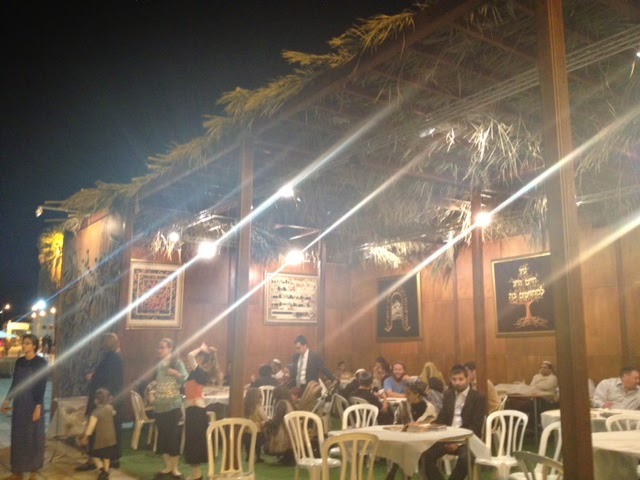
Family eating in cummunal sukkah
Sukkah in King David Hotel Jerusalem
Carmel market Tel Aviv
Simchat Torah, Rabin Square Tel Aviv
Soldiers and a child near the Wailing Wsll
Tel Aviv sunset
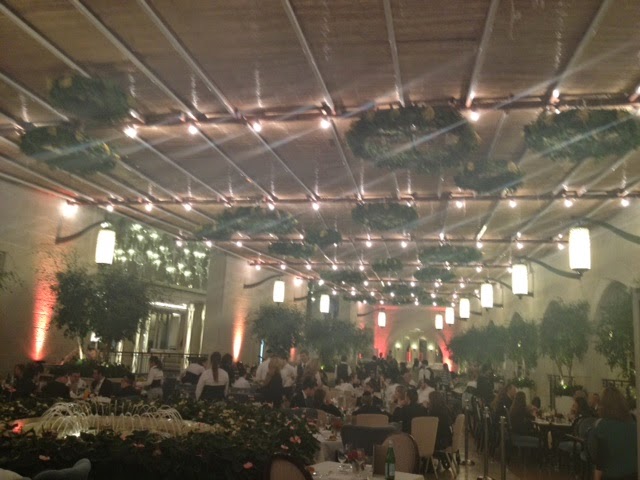
Sukkah in Waldorf Astoria Jerusalem
Wailing Wall at night


Saturday, July 22, 2006

Letter from Israel

The following is from a friend in Jerusalem


Everyone keeps asking what life is like here for us now, what our experience is, so I decided to write this.

It is indeed an extremely distressing time for our country, one that we have been thrust into with no notice. Yes, admittedly, we saw the Hizbollah's gradual arms and outpost accumulation in southern Lebanon across our northern border, but we were unprepared for the bold border crossings and kidnappings of Eldad Regev and Ehud Goldwasser, who were abducted by Hizbollah in the north, and of Gilad Shalit, who was abducted by Palestinian militants on Israel's border with Gaza. These soldiers are not POWs who fell into enemy hands while invading others' territories – they were audaciously kidnapped from our own land where they were guarding our internationally-recognized borders!

We had no time to prepare for this war, like we did before the Gulf War. The civilian population is still reeling from the shock of the rocket attacks' very existence, shock at the jarring interruption of our seemingly routine lives, shock at the casualties that will undoubtedly intensify as this continues. I say "seemingly routine lives," because the threat of attack from the terrorists around us is always lurking underneath the surface, as you know.

Perhaps what is hardest to accept is that no one the world over has adequate solutions for the threat of terrorism, not in Lebanon or Gaza, not in Afghanistan or Iraq, not in western countries where covert terrorist movements thrive underground. The only way to wipe out Hizbollah in Lebanon is to harm countless innocent Lebanese citizens who have been infiltrated and victimized by the terrorist organization for years. We could not live with our conscience if we caused such massive bloodshed to our Arab neighbors; although the Hizbollah has no compunction doing so. If the Hizbollah cared for its Moslem "brothers" as much as they say, then the organization would not put blameless children and families in jeopardy by launching rockets from their homes and hiding in bunkers underneath them. Of course, we ourselves are also not willing to pay the high price of losing countless soldiers in this war.

Another difficult aspect of the current conflict is the involvement of areas of Israel that have not been directly hit since the Yom Kippur War or beforehand. That means that many parents of young children have never experienced anything like this, although seasoned grandparents are pulling their old war stories out of the dust.

Faced yet again with another war we did not seek, Israelis are buckling down for an unknown period of hostilities simultaneously on four fronts – the thunderous northern border with Lebanon that is now at the focus of international media, but also the ongoing turbulent border with the Gaza Strip in the southwest, and the quieter but still volatile West Bank, and, finally, the long-term battle against suicide bombers in our cities.

Millions of citizens in northern Israel, like their counterparts in Sderot, are now experiencing daily bombardments of haphazard rocket shelling into their cities, kibbutzim, and neighborhoods. They sit, cramped, in long-unused, stifling air raid shelters, for those who have them. Or in specially-constructed "safety rooms" if their homes were built more recently. Or in basements away from windows and doors, if neither of the other options are available. They have been told to lie prone, to minimize injury from shrapnel. They await the sirens, they await the deafening "boom," up to 100 each day, and they pray that the katyusha rockets will fall into open areas and not directly hit their homes. They await fate.

So, life is mostly at a standstill for millions of regular citizens as they remain close to, or inside, shelter. No work, no summer camp, no shopping malls, no amusements for children on summer holiday. They only make fearful sprints to the local grocer (mandated to stay open by the homefront security agency) for minimal provisions. A friend of mine in Haifa hazarded a shopping excursion on a relatively "quiet" day after a week of ransacking her cupboards, but found herself standing helplessly with other shoppers as three rockets fell close by. She returned home safely, but stunned and shaken.

In the rest of Israel, however, we are, surrealistically, living our lives almost as usual! Except for ardently keeping an ear to the media, and carrying our heavy hearts, we continue to work, our children attend camps and go to movies, we meet with friends, we go out. Metropolitan Tel Aviv was put on rocket alert a few days ago, under the assumption that, when desperate, Hizbollah leader Nasrallah will unleash his long-range missiles of destruction for one last stand. But, for now, in typical Israeli "sabra" style, all of us in central and southern Israel are moving about in our regular routines, living our lives, motivated by the desire to show all terrorists that they cannot succeed in diminishing our morale and cannot bring us to an economic and social standstill.

Yet, despite the stark contrast between the hard-hit areas being shelled and the rest of Israel, an amazing thing has happened. For the first time that I can remember in all my 25 years in this country, people from all walks of life and political orientations, including those who are now being exposed to the relentless threat of violent attacks on their pastoral countryside up north, are today united in their support of the government's and the IDF's actions, both military and diplomatic. We even see injured Israelis climbing out of rubble from rocket attacks on their homes, who, despite their personal losses, immediately cry out their support of the current IDF airstrikes on Hizbollah nerve centers and operation bases in Lebanon.
Israelis generally have a very positive attitude toward the Lebanese people and their beautiful country. We have no ill will toward her citizens, unless they collaborate with the Hizbollah guerrillas trying to attack us. We are grateful to the many Lebanese who helped us for years to combat terrorism in southern Lebanon (many of whom received sanctuary here in 2000). But now, across the board, we are all committed to the notion of eliminating the terrorist threat that has been constantly looming over our northern border since we pulled out of Lebanon six years ago. We all want the Lebanese government to stand up for itself against Hizbollah's Iran- and Syria-based infiltration of its land. We want the Lebanese government to take control and evict the terrorists from their midst, like they ejected the Syrian army last year. Unfortunately for the Lebanese, many are frightened of the fanatic Hizbollah and cannot refuse the terrorists' demands to use their homes and workplaces as launching pads for their rockets. They are in danger of harm from our air strikes then, yes. But to protect innocent citizens as much as possible, Israel announces its attacks beforehand (via the electronic media and dropping flyers from the sky) to warn residents to evacuate, and provides humanitarian aid to Lebanese victims. (Unfortunately, our public relations experts are not sufficiently getting this point across over the media.) For comparison, you should know that the rockets being launched into Israeli residential areas are loaded with tiny steel balls, nuts, bolts, bearings, etc., which aim to exacerbate the deadly effect of the explosions – to kill and maim more civilians, much like the suicide bombs.

Israel is sick and tired of being attacked without provocation on our northern border and on our border with Gaza. How would U.S. citizens feel if rockets were being launched into Texas from Mexico and into Montana or North Dakota from Canada? Or if Mexican or Canadian terrorists crossed over into the U.S. and kidnapped soldiers on border patrol? The U.S. would surely act to try to eliminate this threat once and for all. And for once, during the current conflict, George W. Bush has shown real backbone in supporting our operations in Lebanon. As have so many other world leaders, especially the powerful G8. We've been surprised but very pleased to gain the world's overwhelming support of (or at least quiet acquiescence with) our fight against Hizbollah and Hamas terrorism. Especially encouraging have been the voices of moderate Arab nations like Egypt, Jordan and Saudi Arabia criticizing Hizbollah and calling for a return of our kidnapped soldiers.

It seems that, as many newspapers have been commenting over this past fortnight, the world is realizing that our fight is the free world's fight, against totalitarian regimes who want to destroy the western way of life. Iranian president Ahmadinejad has made it unmistakably clear that he wants to annihilate Israel. The world agrees that he and his associates are behind this entire conflict, trying to distract the world from Iran's nuclear proliferation, with the ultimate goal of eradicating Jews and Christians alike in the name of "Allah's holy war" against heretics.
I hope that you have been attending the rallies in your cities in support of Israel, and doing your part over the web, in online polls, and in private or public conversations, to prevent supportive world opinion from eroding, as it inevitably will. The pictures from Lebanon are heartwrenching, and our own citizens' suffering looks minute in comparison. Without knowing the whole context, the world will not understand why we do what we do.

I don't know what the consequences will be of the battles raging around us. The Hizbollah has prepared well for this day and is deeply entrenched in a labyrinth of bunkers and underground tunnel systems for their arsenals and militants. It's hard to say how effective the IDF will be at disarming the Hizbollah or how successful the diplomatic channels will be at finding a feasible peaceful solution for southern Lebanon. But I do know that we have to try.

And in the meantime, the Israeli people's conduct during this 10-day-old war has strengthened and inspired me to no end. Homes all over the country have been opened up to displaced families from the north. Volunteers are slipping up north to entertain bored children, confined for days in crowded public shelters. Recreational parks have offered discounts and free activities to northern children. Psychological agencies, welfare organizations, charities, non-profit organizations, and the like have coordinated efforts to provide hotlines, treatment, support as well as food and other staples to families cut off from normalcy.

A friend of mine, a professor at Haifa University, described to me the funeral she attended of one of the soldiers killed in the tank ambush on that first day of fighting (his mother is an educator who works with my friend). She told me that she didn't expect anyone to venture outdoors to the military cemetery, but she found that hundreds of people braved the air raid sirens and possible rocket strikes to attend. They must have all felt that the family who had suffered this ultimate tragedy needed their caring and support, and they were all willing to put themselves at personal risk to grant the family that support. Indeed, just as the rabbi was singing the soulful "El male rachamim" (Merciful God) traditional prayer over the fresh grave, sirens started to wail, and the soldiers broke out of ceremonial position to try to move the mourners under cover, but no one would budge. They wanted to give that family, and that soldier who died for his country, the last respects he so deserved. Fortunately, that time, the rockets landed at a distance. But this story touched my heart because it epitomizes the strength of our community and of our people. In day to day life, we may each be preoccupied with personal concerns, but at times of need, the true underlying strength of the Israeli people emerges.

Take care, everyone.
Love and kisses from Jerusalem